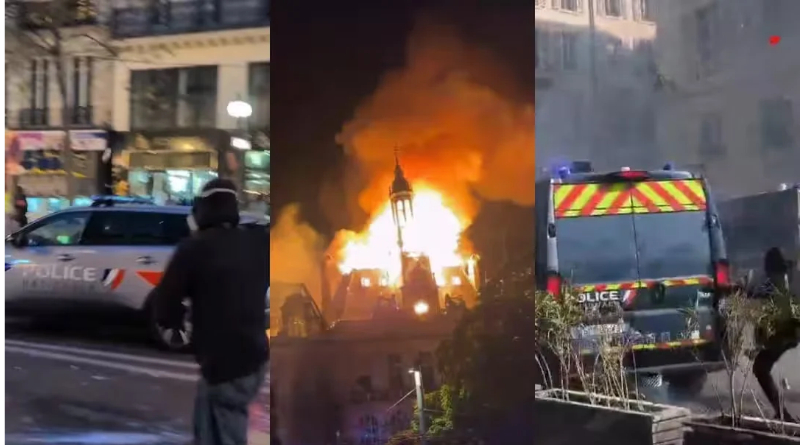
Protests against inflation and poor public services in France turned violent. Several cities, including Paris, were set on fire and looted. According to the Prime Minister, more than 1,200 people were arrested.
Massive protests erupted in France on Saturday, October 17, against rising inflation, deteriorating public services, and school problems. Clashes broke out between police and protesters in several cities, including Paris. Shops were vandalized and looted in some locations, while several buildings were set on fire. According to French Prime Minister Sebastien Lecornu, more than 1,200 people were arrested and 150 police officers were injured in the violence.
According to French Interior Minister Laurent Nunes, approximately 550,000 people participated in the protests nationwide. Of these, approximately 110,000 took to the streets in Paris. However, organizations organizing the protests claimed that approximately 800,000 people participated.
Clashes between police and protesters in Paris
The main march in Paris remained largely peaceful during the day, but by evening, the situation deteriorated in several places. Some protesters set fires in the streets and damaged vehicles. There were also reports of arson and clashes with police around the Place de la République.
Police used tear gas and water cannons to disperse the crowds. In some places, police also resorted to lathi-charge against protesters. Numerous shops and businesses were vandalized and looted.
Macron condemned the violence
French President Emmanuel Macron condemned those involved in arson, looting, and attacks on government buildings. He stated that legal action would be taken against those involved in violence and vandalism. Prime Minister Sebastien Lecornu also stated that no one should be allowed to advance their political agenda through violence. The government distinguished between peaceful protests and violence and vowed to take action against those involved in vandalism.
Why did people take to the streets?
In France, the movement began over the poor condition of schools and a shortage of teachers. Gradually, it expanded to include issues such as inflation, fuel prices, economic hardship, and the decline of public services. Trade unions supported demands for improved wages and pensions and the provision of essential services.
Not all protesters engaged in violence. In many cities, large numbers of people also held peaceful marches. Violent incidents occurred in some areas, with clashes between police and protesters, and damage to shops and government buildings.