

Let’s be honest: most of our choices come down to two simple things: pure convenience and a sneaky bit of FOMO.
Picture this: you are walking through a mall or moving quickly between meetings and your brain is almost shouting for a quick reset. Ten years ago you probably would have grabbed a strong soda or a plain iced coffee without thinking about it. Today you are likely looking for something much more fun; perhaps a cup full of bright juice‑filled spheres that pop with fruit flavor as soon as you take a first sip (trust us on this).
Welcome to today’s drink world, where beverages are no longer just hydration. People want more and so we ought to provide for them, over their needs and wants. They are a style item, an experience and a quiet comfort all wrapped together.
At the heart of this change is the rise of Ready‑to‑Drink (RTD) beverages. Why exactly do younger people give up old‑school sodas for newer options? The answer lies at the intersection of social anxiety, global pop culture, and a genuine craving for something fun.
When Convenience Meets Low‑Stakes Ordering
There is a reason behind the rapid growth of pre‑packaged grab‑and‑go drinks among Gen Z and Millennials: the real relief of not having to order out loud.
Choosing a drink at a counter can feel like a high‑stakes test. How much sugar? How much ice? Which topping goes with which drink? For anyone who feels social anxiety or just wants to skip a long line and a complicated conversation the usual cafe set‑up can be very tiring.
RTD drinks skip all that hassle; simply grab one from the shelf. Have it delivered to your door with a quick tap. It gives you all the pleasure of a custom cafe drink without the back‑and‑forth. It is easy, fast and completely on your terms.
Moving Away from Soda Without Sacrificing the Fun
For years fizzy soft drinks were the only fun, bubbly drinks. Habits are changing. Today’s consumers are moving away from strong carbonation and artificial syrups looking for drinks that feel a little more special.
Yet moving away from sodas does not mean people suddenly want bitter health tonics or plain water. We still want what is familiar. We want the comfort of fruit flavors like crisp mango, juicy lychee, fresh lemon and zesty berries. We want drinks that actually taste good and maybe not mind once in a while indulging in something worthy, and definitely not feel like we’re sacrificing our taste buds just to fit in.
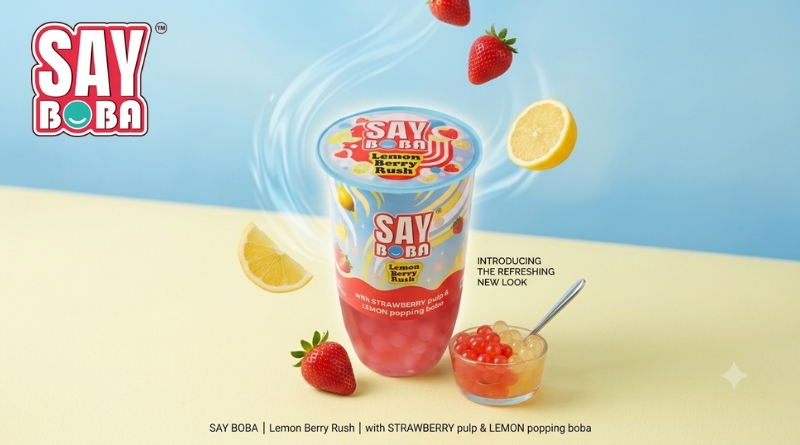
This is where drinks like Say Boba step in. They nail the sweet spot by turning a routine drink break into a full-on event.
Say Boba is more than just a beverage- it’s a “Dreat” (Drink + Eat). Packed with wholesome, vibrant fruit profiles, every cup delivers a double dose of flavor. Many of their signature drinks feature dynamic dual-flavor combinations, pairing one distinct juice base with a completely different popping boba flavor for a taste combination that hits with every sip. Best of all, you don’t need to hunt down a specialty shop or wait in a massive line; you get the convenience of a world-famous global trend delivered straight to your door via sayboba.com.
The Science of the ‘Pop’: Tapioca vs. Popping Boba
To truly appreciate the boba phenomenon it helps to know the mechanics of what you are actually drinking. While most people group all boba together, traditional tapioca pearls and popping bobas are very different.
Traditional tapioca pearls come from cassava root starch. They are cooked until they become dense, sticky and chewy, a texture often called “QQ” in Taiwan. They soak up syrup. Add a heavy dessert‑like element to milky teas. They absorb syrup and add a heavy, dessert-like element to milky teas.
Popping boba on the hand uses a cooking method called spherification. A flavored fruit juice is mixed with an amount of natural sodium alginate, which comes from sea kelp. Drops of this mixture are placed into a calcium bath. The reaction instantly creates a thin jelly‑like outer shell around the liquid core while the inside stays completely liquid.
When you sip popping boba through a straw the feeling is completely dynamic. You do not need to chew; instead the outer shell gives way under pressure and releases a quick burst of juice. It is an interactive way that turns a normal drink into something much more; something otherworldly, something very special.
Global Culture, Local Craving: Busting the Myth
With boba appearing on every social media feed from Tokyo to Toronto global trends move fast as a swipe. The FOMO is real and younger people in India want the cultural staples that enjoy global hype.
And while we are talking about trends let us clear up a huge very common mistake: Boba is not Korean.
Because K-dramas K-pop and Korean food are so popular worldwide many people think Boba started in Seoul.. Boba was actually created in Taiwan in the late 1980s. Boba began as a night‑market snack in Taiwan then spread quickly through Southeast Asia reaching North America in the late 1990s and early 2000s and now Boba is found all over the world.
Not a Passing Fad, But an Everyday Staple
Critics can easily dismiss drinks as just another Instagram trend that will fade in a year.. History shows that this is not true. Boba drinks have been a part of life in East and Southeast Asia for almost forty years. Boba has survived generations because Boba satisfies a human need: food and drink should be enjoyable, nostalgic and fun.
What we see in India today is not a fad. It is the spread of a staple. Ready‑to‑drink versions allow people to get Boba from the shelf without waiting long at a cafe. Boba is becoming a part of life.
Next time you grab a cup, take a moment to appreciate what’s in your hand. It’s a little bit of food science, a nod to global food culture, and a hassle-free bite of pure indulgence in the middle of a busy day.